
Study links anti-Ro antibody patterns to disease features in Sjögren’s
Antibody patterns tied to lung disease and broader organ involvement
Written by |
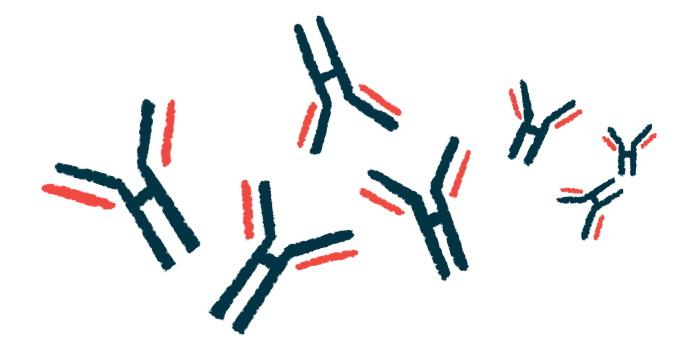




Blood levels of two self-targeting antibodies commonly elevated in people with Sjögren’s disease may define distinct patient groups with different levels of disease severity and organ involvement, a single-center study in China shows.
For example, testing positive for anti-Ro52 antibodies alone was associated with lung disease, while testing positive for both anti-Ro52 and anti-Ro60 antibodies identified a distinct group of patients with multi-organ involvement and signs of immune system overactivation.
“Anti-Ro [antibody] stratification may serve as a practical tool for identifying pSjD [primary Sjögren’s disease] patients at risk for specific severe manifestations, thereby facilitating personalized risk assessment and early intervention,” the researchers wrote.
The study, “Serological Stratification by Anti-Ro52 and Anti-Ro60 Profiles Reveals Distinct Systemic Phenotypes in Primary Sjögren’s Disease,” was published in Seminars in Arthritis and Rheumatism.

Anti-Ro antibodies play key role in Sjögren’s disease
In Sjögren’s, the immune system mistakenly produces self-reactive antibodies that attack healthy tissues, most often in the body’s moisture-producing glands. This leads to hallmark symptoms such as dry eyes and dry mouth. Many patients also develop problems outside the glands, affecting organs such as the lungs, kidneys, joints, and liver.
To help diagnose Sjögren’s, doctors often measure blood levels of self-targeting antibodies, including anti-Ro antibodies (also called anti-SSA). These antibodies target two different proteins in the body, Ro52 and Ro60, and are found in roughly 70% of Sjögren’s patients.
While their presence supports a diagnosis, these antibodies are not exclusive to Sjögren’s and can also appear in other autoimmune diseases, including lupus.
“Although anti-Ro52 and anti-Ro60 antibodies frequently co-occur, they can also present independently, and growing evidence suggests they may harbor different clinical … significances,” the researchers wrote.
Previous research suggests that anti-Ro52 antibodies are strongly associated with lung complications, while testing positive for both anti-Ro antibodies has been linked to overactivation of B-cells, the immune cells that produce antibodies.
As a result, many experts argue that testing for anti-Ro52 and anti-Ro60 separately — rather than reporting a single combined anti-Ro result — could provide more meaningful clinical information about an individual patient’s risk profile.
Study examines how antibody patterns relate to disease features
With this in mind, researchers in China examined how different anti-Ro52 and anti-Ro60 antibody patterns relate to organ involvement and immune abnormalities in 725 adults with primary Sjögren’s, a form of the disease that develops on its own.
Nearly all patients (89.1 %) were women. About half (50.6%) tested positive for both anti-Ro52 and anti-Ro60 antibodies (the double-positive group), while 17.7% had anti-Ro52 antibodies alone, 10.2% had anti-Ro60 antibodies alone, and 21.5% tested negative for both.
When the team compared the antibody test results to demographic and clinical data, certain patterns emerged. Participants who tested positive for anti-Ro60 antibodies, with or without anti-Ro52 antibodies, developed symptoms at a significantly younger age, and patients who tested positive for both antibodies or negative for both had a significantly longer disease duration.
Dry mouth and dry eyes were common across all groups, but were significantly more frequent in double-positive patients. In that group, 73% reported dry mouth, 52.6% had dry eyes, and 75.1% had biopsy results confirming gland inflammation.
Patients with anti-Ro52 antibodies, either alone or with anti-Ro60 antibodies, had significantly more active disease, as assessed by the EULAR Sjögren’s Syndrome Disease Activity Index, than those with anti-Ro60 antibodies alone or who tested negative for both antibodies.
Antibody profiles were also significantly linked to a higher risk of specific organ involvement. Statistical analyses adjusted for potentially influencing factors showed that patients with anti-Ro52 antibodies alone were four times more likely to develop interstitial lung disease, when the lungs become inflamed and scarred.
Double-positive patients show broader organ involvement
In contrast, the double-positive antibody profile was associated with a more than five-fold higher risk of kidney involvement and a more than two-fold higher risk of skin involvement. The group was also more than five times as likely to have abnormally high antibody levels in the blood and had a 70% higher risk of low levels of the immune proteins C3 or C4, a sign that the immune system is overactive.
The findings highlight that Sjögren’s patients who test positive for both anti-Ro52 and anti-Ro60 antibodies represent “a distinct group … who have multifaceted disease activity with prominent manifestations of [kidney] and immune dysregulation,” the team wrote.
“Our findings establish that stratification of pSjD patients based on anti-Ro52 and anti-Ro60 antibody profiles identifies subgroups with distinct clinical trajectories and burdens of [body-wide] disease,” the researchers concluded. “The detection of both antibodies is necessary for comprehensive risk assessment.”


Leave a comment
Fill in the required fields to post. Your email address will not be published.