
Sjögren’s symptoms extend far beyond dryness, U.S. survey finds
Fatigue, pain, brain fog plague among issues affecting patient's daily lives
Written by |





People with Sjögren’s disease don’t only have to deal with eye and mouth dryness, but also a wide range of other symptoms that can include fatigue, pain, brain fog, and difficulty sleeping, according to a U.S. survey conducted by the Sjögren’s Foundation.
In fact, results from the 2025 Living with Sjögren’s patient survey suggested that fatigue, not dryness, is the symptom that most commonly causes problems in day-to-day life for people with Sjögren’s.
“For too long, Sjögren’s has been misunderstood as a disease primarily defined by dryness,” Janet Church, president and CEO of the Sjögren’s Foundation and a person living with Sjögren’s, said in a foundation press release. “What these data make clear is that patients are dealing with far more than dryness alone; they are navigating overwhelming fatigue, challenges like brain fog, joint and muscle pain, trouble sleeping, and a range of symptoms that affect nearly every part of their lives.”
The survey findings were released as part of the nonprofit’s campaign to raise awareness during April, Sjögren’s Awareness Month.
“These findings validate what people living with Sjögren’s have been saying for years,” Church said. “By pairing these data with real patient stories during Sjögren’s Awareness Month, we have an opportunity to deepen understanding, spark important conversations, and ensure that people living with Sjögren’s are seen, heard, and supported.”

Survey highlights patients’ lived experiences
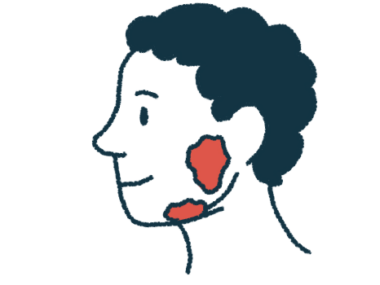
Sjögren’s is an autoimmune disease characterized by inflammation of the tear and salivary glands, leading to the hallmark symptom of dry eyes and/or mouth. But Sjögren’s can also affect other parts of the body, leading to a range of other symptoms.
The survey, conducted online between Aug. 7 and Sept. 4, 2025, was designed to shed light on the lived experiences of people affected by Sjögren’s.
A total of 6,360 adults in the U.S. with a Sjögren’s diagnosis completed the survey. Most identified as women (95%) and white (85%), and nearly half (49%) were 65 or older, while less than 6% were younger than 40.
Dry eyes and/or dry mouth were the most commonly reported symptoms in the year, with more than 90% of respondents saying they experience dryness every day or every week. Most of these patients also said that dryness has a moderate to major impact on their day-to-day life.
After dryness, the most common symptom was fatigue, reported by 90% of respondents, most of whom said they experienced it daily or weekly and that it had a moderate or major impact on day-to-day life. In fact, although dryness was overall more common as a symptom, a higher proportion of patients reported a moderate to major impact from fatigue than from dryness.
The survey also highlighted a wide range of other symptoms commonly experienced by Sjögren’s patients. A list of symptoms reported by at least half of the respondents includes: joint pain (81%), brain fog (77%), dry/itchy skin (76%), trouble sleeping (73%), muscle pain (63%), nerve damage (61%), constipation (59%), vision problems (59%), headache (56%), and muscle weakness (54%).
More than 60% of patients said they experienced these and other common symptoms daily or weekly, “reinforcing that Sjögren’s is not an occasional condition, but a persistent one that requires ongoing management,” the foundation said.
Sjögren’s symptoms can have a substantial effect on daily life, the survey highlights: 81% of respondents agreed with the statement “My Sjögren’s gets in the way of the things I need to do each day.” Nearly three-quarters reported difficulty with daily tasks such as cooking, cleaning, and getting dressed, and more than half said that Sjögren’s had negatively affected their careers.
Sjögren’s also affects patients’ mental health and relationships. Most survey respondents said the disease adds to their emotional burden (86%) and has caused problems in their relationships with romantic partners (59%) and/or family members (67%). About half reported a diagnosis of anxiety, depression, and/or agreed with the statement “I feel lonely because of my Sjögren’s.”
Negative impacts on sexual health were also common, reported by almost two-thirds of the respondents. Many Sjögren’s patients experience sex-related problems such as pain during intercourse (28%), erectile dysfunction (36%), and/or difficulty reaching orgasm (19%).
Nearly three-quarters of respondents said the disease has added a financial burden to their lives. Two-thirds reported the diagnosis of at least one other autoimmune disease, with the most common being rheumatoid arthritis, which affects the joints (22%).
The survey highlights that the impacts of Sjögren’s disease extend far beyond dry eyes and mouth.
“Sjögren’s is a daily disease that is relentless,” Church said. “It affects a person’s ability to function, to work, to maintain relationships, and to participate in everyday life. The effect of these symptoms can be overwhelming and can change how someone is able to live the quality of life they deserve.”


Maureen Andrews
I have experienced most of the above from my family members, who, because they don't understand, are impatient with me when I try to explain that I am feeling bone weary and cannot join in family functions. It is hard to explain as nothing shows to validate my feelings......such as a broken limb or bruised eye !!!!
Joanna Westerfeld
My daughter has this awful disease. She is barely living, In the beginning she read everything she found online and watched informative video's by a specialist with Sjogren's in San Francisco, CA. We watched with her to find out all we could. She also wanted to be able to discuss her condition with her rheumatologist. She is in pain 24/7. Lucky, if one activity a day is done Often needing a day of rest in between daily work like cooking an easy meal or laundry. Rarely going out except to doctor appointments, if she doesn't cancel because she does not have the energy. This alone lends it self to loneliness and seclusion. We used to attend plays, movies and going out to a restaurant. Traveling by car, even for an hour or 2 so is painful. She is only 50 years old and was diagnosed 4 years ago. Her doctors refuse to give her even mild pain medication, because of the opioid restrictions for long term use. We are at a loss trying to be of help. She exist, but she is not living a productive or enriched or a happy life. I am her Mom and this is her story.
Rony Costa
I believe that this syndrome is not well understood by other health practitioners besides the eye consultants, rheumatoid and dental.All these function independently which makes harder to manage all the problems that this syndrome causes
Patricia Ross
Don’t forget neurological symptoms. Neuropathy is my worst symptom, interfering with my daily life.
mary robinson
I read this article stating sjogren's caused brain fog, sleep disruption, etc. Are any treatments to cure this disease being studied?